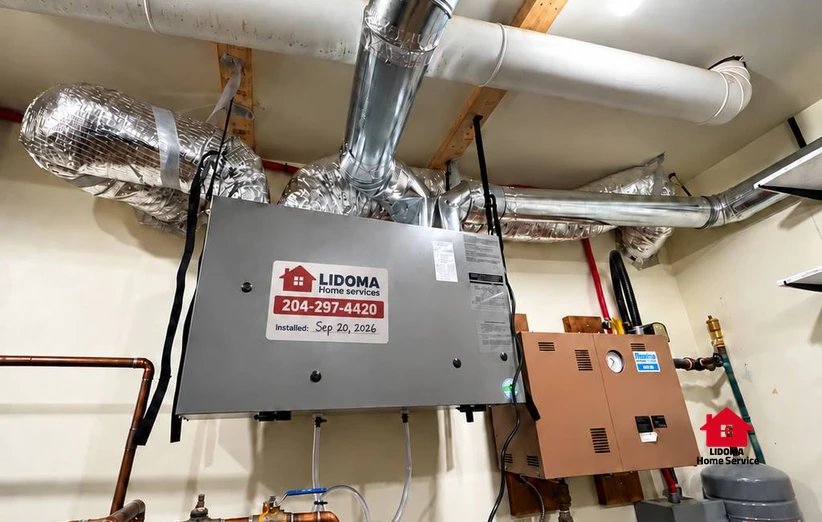
Professional HRV Installation in Winnipeg
Fresh indoor air is important in every home, especially in Winnipeg’s long heating season. When windows stay closed for months, stale air, excess humidity, odours, and indoor pollutants can build up inside the home. A properly installed Heat Recovery Ventilator, also known as an HRV, helps bring fresh outdoor air into your living space while exhausting stale indoor air.
LIDOMA Home Services Ltd provides professional HRV installation in Winnipeg for homeowners and businesses that want better ventilation, improved comfort, and healthier indoor air. Our team installs HRV systems designed to work with your home’s ventilation needs, existing HVAC setup, and Manitoba’s cold climate.
An HRV is especially useful in well-sealed homes, renovated properties, newer builds, and spaces where moisture, odours, or stale air are a concern. By recovering heat from outgoing indoor air, an HRV helps reduce heat loss from ventilation while still allowing your home to receive a steady supply of fresh air.
What Is an HRV System?
An HRV, or Heat Recovery Ventilator, is a mechanical ventilation system that exchanges stale indoor air with fresh outdoor air. During this process, the system transfers heat from the outgoing air to the incoming air, helping your home stay ventilated without losing as much warmth during cold weather.
In a Winnipeg home, this matters because outdoor temperatures can stay extremely low for long periods. Without proper ventilation, indoor air can become stale, humid, or uncomfortable. An HRV helps balance fresh-air intake with energy-conscious ventilation.
HRV systems are commonly used in:
- Newer energy-efficient homes
- Renovated or tightly sealed homes
- Homes with moisture or condensation concerns
- Properties with stale air or lingering odours
- Houses with finished basements
- Homes where windows remain closed for much of the winter
- Residential and light commercial HVAC systems
Why HRV Installation Matters in Winnipeg
Winnipeg’s climate creates unique indoor air challenges. During the winter, homes are often closed tightly to retain heat. While this helps with comfort, it can also reduce natural ventilation. Over time, this may lead to stale air, humidity issues, condensation on windows, and poor indoor air circulation.
A professionally installed HRV can help support:
- Better fresh-air ventilation
- Reduced stale indoor air
- Improved indoor comfort
- Better humidity management
- Reduced condensation concerns
- More balanced airflow
- Healthier air circulation throughout the home
- Energy-conscious ventilation during cold weather
HRV installation is not only about adding equipment. Proper sizing, duct layout, airflow balancing, and integration with the existing HVAC system all affect how well the system performs.
Signs Your Home May Need an HRV
You may benefit from an HRV installation if you notice:
- Stale or stuffy indoor air
- Condensation on windows during winter
- Excess humidity in certain rooms
- Lingering cooking, basement, or household odours
- Poor airflow or uncomfortable rooms
- A recently renovated or tightly sealed home
- A newly built energy-efficient home
- Moisture concerns in bathrooms, laundry areas, or basements
- Family members who are sensitive to indoor air quality
- Windows staying closed for most of the heating season
These signs do not always mean an HRV is the only solution, but they are good reasons to have your ventilation system assessed.
Our HRV Installation Process
At LIDOMA Home Services Ltd, we take a practical and careful approach to HRV installation. Every home is different, so the system should be selected and installed based on the building layout, airflow needs, and HVAC configuration.
Our HRV installation process may include:
1. Home Ventilation Assessment
We review your home’s ventilation needs, existing HVAC system, available installation space, and areas where stale air or moisture may be a concern.
2. HRV System Selection
We help determine a suitable HRV system based on the size of the home, ventilation requirements, ducting options, and comfort goals.
3. Installation Planning
Proper placement matters. We consider mechanical room layout, duct routing, exterior vent locations, airflow paths, and access for future maintenance.
4. Professional HRV Installation
The HRV unit is installed with attention to secure mounting, proper duct connections, outdoor intake and exhaust placement, and integration with the home’s ventilation system.
5. Airflow Setup and System Check
After installation, the system is checked for proper operation. Airflow, controls, and general performance are reviewed so the HRV can operate as intended.
6. Homeowner Guidance
We explain how to use the HRV controls, when to adjust settings, and how to maintain filters and basic components.
Benefits of a Properly Installed HRV
A well-installed HRV system can provide several comfort and ventilation benefits for Winnipeg homes.
Potential benefits include:
- Bringing fresh outdoor air into the home
- Exhausting stale indoor air
- Supporting better indoor air quality
- Helping manage excess humidity
- Reducing window condensation concerns
- Improving comfort in tightly sealed homes
- Reducing heat loss compared to simple exhaust-only ventilation
- Supporting balanced ventilation throughout the home
- Helping remove odours from bathrooms, kitchens, basements, and living areas
The final performance of an HRV depends on proper sizing, installation quality, duct design, controls, maintenance, and the overall condition of the home’s HVAC system.
HRV Installation for New Homes and Renovations
HRV systems are especially useful in new construction and major renovation projects. As homes become better sealed and more energy efficient, natural air leakage is reduced. This can improve energy performance, but it also means the home may need a planned ventilation system to maintain fresh indoor air.
If you are finishing a basement, upgrading insulation, replacing windows, or completing a major renovation, it may be a good time to consider HRV installation.
An HRV can help support fresh-air ventilation in:
- New home builds
- Basement developments
- Major renovations
- Energy-efficiency upgrades
- Window and insulation improvement projects
- Homes with reduced natural air leakage
HRV Installation for Existing Homes
Older homes in Winnipeg can also benefit from HRV installation, especially if ventilation is limited or indoor air feels stale during the winter. Many existing homes have mechanical rooms, basement utility spaces, or ductwork configurations that may allow an HRV to be integrated into the HVAC system.
Before installation, it is important to assess:
- Available space for the HRV unit
- Existing ductwork
- Furnace and ventilation layout
- Exterior wall access for intake and exhaust vents
- Airflow needs throughout the home
- Moisture or condensation concerns
- Maintenance access
A careful assessment helps avoid poor airflow, noisy operation, or inefficient ventilation.
HRV and Indoor Air Quality
Indoor air quality depends on many factors, including ventilation, filtration, humidity, cleaning habits, building materials, and HVAC maintenance. An HRV is not a replacement for good filtration or proper HVAC service, but it can be an important part of a healthier indoor environment.
By continuously exchanging stale indoor air with fresh outdoor air, an HRV can help reduce the buildup of:
- Household odours
- Excess moisture
- Stale air
- Indoor pollutants
- Bathroom and laundry humidity
- Basement air concerns
- Cooking-related odours
For many Winnipeg homeowners, HRV installation is one of the most practical ways to improve ventilation without relying on open windows during the coldest months.
HRV Maintenance After Installation
Like any HVAC component, an HRV needs basic maintenance to perform properly. Filters should be checked and cleaned or replaced as recommended by the manufacturer. The core, drain line, exterior vents, and duct connections should also be inspected periodically.
Basic HRV maintenance may include:
- Cleaning or replacing filters
- Checking the heat recovery core
- Inspecting exterior intake and exhaust vents
- Making sure vents are not blocked by snow, debris, or lint
- Checking drain lines where applicable
- Reviewing airflow and system operation
- Scheduling professional service when performance changes
Proper maintenance helps protect airflow, indoor air quality, and system performance.
Why Choose LIDOMA Home Services Ltd for HRV Installation?
LIDOMA Home Services Ltd provides HVAC and ventilation services for homes and businesses in Winnipeg and surrounding Manitoba communities. We understand the importance of proper ventilation in a cold climate and install HRV systems with attention to airflow, comfort, and long-term usability.
Customers choose LIDOMA Home Services Ltd for:
- Local HVAC service in Winnipeg
- Practical ventilation recommendations
- Careful HRV installation
- Clear communication before and during the job
- Clean workmanship
- Support for residential and light commercial properties
- HVAC knowledge suited to Manitoba’s climate
Our goal is to help your home breathe better while maintaining comfort during Winnipeg’s heating season.
Book HRV Installation in Winnipeg
If your home feels stale, humid, or poorly ventilated, an HRV may be the right solution. LIDOMA Home Services Ltd can assess your ventilation needs and provide professional HRV installation in Winnipeg for your home or business.
Call (204) 297-4420 or book your HRV installation online to get started.
LIDOMA Home Services Ltd – Professional HRV Installation in Winnipeg for Fresher, Healthier Indoor Air
Book Now !