Why Duct Cleaning Quotes Vary Across Winnipeg Homes
Practical Cost Factors and Homeowner Expectations for Winnipeg, Manitoba
Author : Lidoma Home Services Ltd
If you are comparing duct cleaning quotes in Winnipeg, the confusing part is usually not whether the service sounds useful. It is why one home is simple to quote while another needs more time, more access work, or additional inspection before anyone can give a responsible answer. The cost of Professional Duct Cleaning in Winnipeg, Manitoba is affected by home layout, number of supply and return openings, duct accessibility, debris level, furnace condition, pets, renovations, moisture history, and whether the system needs related HVAC attention.
A good quote should not be based only on square footage. Two Winnipeg homes with the same floor area can have very different duct systems. Older bungalows may have tight basement mechanical rooms, mixed duct materials, and return-air paths that were altered over decades. Newer homes may have longer duct runs, finished basements, HRV connections, or high-efficiency filtration that changes how the air system should be handled.
Lidoma Home Services approaches duct cleaning as an airflow and system-access job, not just a vacuum appointment. Technicians look at registers, returns, trunk lines, furnace-area access, and signs that dust is being driven by filtration, humidity, leakage, or blower issues. That is the difference between shopping for the lowest sounding number and understanding what work your home actually needs.
Call Lidoma Home Services for a practical duct cleaning estimate
Phone: +1 204 297 4420
Phone: +1 431 374 3360
For homeowners comparing Affordable Professional Duct Cleaning options, the goal should be a clear scope, not a surprise-filled appointment.
Home Size Matters, but Duct Layout Often Matters More
Homeowners often expect duct cleaning cost to rise in a straight line with square footage, but HVAC systems are not laid out that neatly. A compact two-storey house can have multiple vertical runs, branch ducts, return chases, and basement transitions that take more time to access than a larger bungalow with open trunk lines. The number of supply registers and return grilles usually tells a technician more than floor area alone, because each opening may need removal, agitation, vacuum capture, and inspection.
In Winnipeg, many homes have been renovated in stages. A basement may have been finished after the original furnace was installed, a cold-air return may have been boxed in, or a new branch may have been added for an addition or sunroom. These changes can create access challenges. If a technician has to work around finished ceilings, tight joist spaces, or duct runs hidden behind storage, the appointment can take longer than a simple open-basement layout.
The cost factor here is not just labour time. Proper duct cleaning depends on maintaining airflow through the cleaning equipment while disturbing debris inside the duct. Long branch runs, undersized returns, and awkward takeoffs may require more careful tool selection. Lidoma Home Services technicians use process-based assessment at the registers and furnace area before cleaning so the work matches the system rather than treating every duct as the same length and shape.
Return ducts deserve special attention. Supplies deliver conditioned air into rooms, but returns pull household air back to the furnace or air handler. Returns often collect heavier dust, pet hair, lint, and renovation debris because they are under negative pressure when the blower runs. A home with several large returns, panned joist spaces, or return-air cavities may require more cleaning time than a home with fewer, easier-to-access metal return ducts.
A practical homeowner expectation is that a responsible quote should ask about home type, approximate number of vents, number of returns, basement access, recent renovations, pets, and visible debris. If a company does not ask any layout questions, the quote may be too vague to compare fairly. Lidoma Home Services ties duct cleaning conversations to actual HVAC layout details, which helps Winnipeg homeowners understand why one home needs a basic visit while another needs a more involved cleaning plan.
This is also where Expert HVAC services Winnipeg homeowners rely on can add value beyond dust removal. If weak airflow, whistling grilles, or rooms that never heat evenly are present, the technician may look for signs of restriction, closed dampers, crushed flexible sections, or heavy filter loading. Cleaning can improve cleanliness inside accessible ducts, but it should not be used as a substitute for diagnosing duct design or equipment performance problems.
Debris Level, Pets, Renovations, and Moisture History Change the Scope
The amount and type of debris inside a duct system has a direct impact on appointment complexity. Light household dust is different from drywall compound, sawdust, pet hair, children’s small objects, construction debris, or material that has become stuck in a return cavity. Renovation debris can be especially stubborn because fine drywall dust can settle in trunk lines, cling to surfaces, and quickly load a furnace filter after the blower starts moving air again.
Pet ownership is another common Winnipeg cost factor. Homes with dogs or cats often have more hair in return grilles, filter cabinets, blower compartments, and low-wall returns. Pet hair can mat together with lint and dust, making it harder to remove with simple suction alone. A careful technician may need to combine negative-air collection with agitation tools at registers and returns so the material moves toward the collection point rather than being pushed deeper into the system.
Moisture history matters because dust behaves differently when it has been exposed to humidity or condensation. Winnipeg homes can experience very dry winter air, humid summer air, and shoulder-season condensation risks in basements or around poorly insulated duct sections. If dust has become damp, packed, or attached to surfaces near a humidifier bypass, cooling coil area, or basement duct run, cleaning may require more careful inspection. Moisture concerns should also lead to questions about source control, not only debris removal.
Lidoma Home Services technicians look for clues that debris is connected to another HVAC condition. For example, dust streaking around vents can point to air leakage at the boot or gaps between the duct and finished surface. A dirty supply grille near a humidifier connection might suggest humidity control or bypass issues. If the furnace cabinet is heavily loaded, Professional Furnace Cleaning may be discussed separately from duct cleaning because the blower compartment, burners, and furnace internals are not the same thing as supply and return ductwork.
Homeowners should be cautious when a quote treats every debris condition as identical. A home that just needs routine cleaning after normal occupancy is not the same as a home cleaned after a major basement renovation. The technician may need more time for register-by-register agitation, return cleaning, trunk access, and post-cleanup checks. That does not mean the job should be mysterious; it means the scope should be explained in plain language before work begins.
Warning signs that debris level may affect cost include dust blowing from vents after filter changes, dark buildup on return grilles, visible debris when a register is removed, recent sanding or drywall work, strong stale odours at startup, and a furnace filter that loads very quickly. Lidoma Home Services uses these clues to set realistic expectations, helping homeowners avoid both under-scoped cleaning and unnecessary add-ons.
Access to Trunks, Returns, and the Mechanical Room Can Add Time
Duct cleaning is partly about equipment and partly about access. The best tools are limited if the technician cannot safely reach the duct openings, furnace area, return drops, or trunk lines. In many Winnipeg homes, the mechanical room doubles as storage. Boxes, laundry items, shelving, water softeners, hot water tanks, and renovation materials can restrict the working area around the furnace and duct connections.
Access affects cost because professional cleaning usually requires more than removing a floor register and vacuuming what can be seen. The technician needs to create controlled airflow, connect collection equipment, access supply and return sides where appropriate, and use agitation tools so debris is carried out rather than loosened and left behind. If furniture blocks registers or finished basement ceilings limit access to key duct sections, the job can take longer.
Older Winnipeg homes can present unique return-air challenges. Some return systems use wall cavities or panned joist spaces instead of fully ducted metal returns. These areas can collect debris differently and may require careful judgment about what can be cleaned effectively. A responsible technician should explain limitations rather than pretending every concealed cavity can be cleaned the same way as a smooth metal duct.
Lidoma Home Services handles access planning by discussing the mechanical room, register locations, and basement finish before the appointment whenever possible. On site, technicians identify supply and return pathways, check for fragile grilles or painted-over registers, and choose tools that fit the duct material and opening size. This reduces the risk of damaging grilles, wall finishes, or duct connections while still giving the system a thorough cleaning attempt.
Homeowners can reduce unnecessary appointment delays with a simple preparation checklist:
- Move furniture away from floor, wall, and ceiling registers where practical.
- Clear a safe work path to the furnace and main ductwork.
- Replace or set aside clutter around the mechanical room before the visit.
- Tell the technician about any recently renovated rooms or sealed-off ducts.
- Point out rooms with weak airflow, dust streaking, or unusual odours.
- Secure pets so doors can be opened and equipment can move safely.
Access is also a fairness issue when comparing quotes. One company may assume every register and duct connection is easy to reach, while another may ask detailed questions first. The second quote may seem more careful because it is based on how the work will actually be completed. Lidoma Home Services focuses on this kind of practical scoping so homeowners are not left wondering why the appointment changed once the technician arrived.
Furnace, Filter, Blower, and Static Pressure Conditions Influence the Value
Duct cleaning cost should be considered alongside the condition of the equipment moving air through those ducts. The furnace blower is the heart of the forced-air system. If the blower wheel is coated with dust, the filter rack leaks around the edges, or the return side is pulling debris from basement gaps, freshly cleaned ducts may not stay clean as long as expected. That is why a technician should pay attention to the furnace area even when the booked service is duct cleaning.
Static pressure is an important HVAC concept for homeowners to understand. It refers to the resistance the blower works against as it moves air through filters, coils, ducts, dampers, and grilles. A duct system with restrictions, dirty filters, closed dampers, undersized returns, or plugged coils can experience poor airflow. Cleaning may remove loose debris from duct surfaces, but it will not correct an undersized return or a filter that is too restrictive for the system.
Winnipeg’s heating season puts long operating hours on furnaces. During extended cold periods, the blower runs frequently, filters load faster, and any return leakage can pull basement dust into the system. In summer, central air conditioning introduces different concerns: condensation at the evaporator coil, airflow across the coil, and humidity control. If airflow is already marginal, dust buildup can make comfort problems more noticeable during both heating and cooling seasons.
Lidoma Home Services technicians may identify situations where duct cleaning should be paired with another HVAC service conversation. If the furnace itself is dirty, Professional Furnace Cleaning may be relevant. If the furnace short cycles, fails to start reliably, or has airflow-related fault symptoms, Furnace Tune-Up and Repair may be the better next step. If a homeowner is planning equipment changes, duct condition may also be discussed before Expert Furnace Installation so the new system is not connected to neglected airflow problems.
For cooling systems, airflow through the ductwork affects coil performance, comfort, and humidity removal. A home with weak airflow after cleaning may need evaluation through Expert Air Conditioner Tune-Up and Repair rather than assuming the ducts are still dirty. If a homeowner is preparing for Professional Air Conditioner Installation, duct cleanliness and airflow pathways should be part of the discussion because the best equipment cannot overcome badly restricted distribution.
The cost lesson is simple: the cheapest duct cleaning quote may not be the best value if no one looks at why dust accumulated or why airflow feels weak. Lidoma Home Services approaches the job through the whole forced-air path: returns, supply runs, furnace cabinet area, filtration, and homeowner symptoms. That helps separate normal duct cleaning needs from system performance issues that require a different solution.
Winnipeg Climate, Humidity Swings, and Older Housing Stock Affect Cleaning Needs
Winnipeg’s climate creates unusual demands on forced-air systems. In winter, outdoor air is extremely cold and indoor air often becomes dry. Dry air can make fine dust more noticeable because it stays light and mobile. Homeowners may see dust on surfaces quickly after cleaning if the home has leaky returns, poor filtration, or frequent door openings that bring in grit from snow, sanding material, and winter traffic.
Summer introduces the opposite challenge. Humidity can rise, basements can feel damp, and air conditioning systems must remove moisture while cooling. If ducts run through cooler basement areas or poorly conditioned spaces, surfaces may experience condensation under certain conditions. Dust plus moisture can create heavier deposits and musty odours. Duct cleaning may help remove debris, but the source of moisture should be understood so the issue does not return.
Older housing stock in Winnipeg often includes retrofitted ductwork, additions, partially finished basements, and mechanical rooms that have been changed over time. Some houses were not originally designed for modern airflow expectations, high-efficiency filtration, HRVs, or central air conditioning. When these systems are layered into older ductwork, the cleaning scope can change because there may be more transitions, tighter access, and more places for dust to collect.
Ventilation and humidity equipment can also affect the duct system. If a home has or is considering Professional HRV Installation, the technician should understand how stale-air exhaust and fresh-air supply connect to the HVAC system. If the home uses Humidifier Installation and Maintenance, the condition of nearby ducts, bypass connections, and humidity settings can influence dust behaviour and condensation risk. These related systems are not automatically part of a duct cleaning appointment, but they can explain why one home needs more diagnostic attention than another.
Filtration is another climate-related cost factor. In long heating seasons, filters may load faster, especially in homes with pets, wood dust from projects, or high occupancy. Some homeowners upgrade filtration to reduce fine particles, and HEPA Filter Installation may be appropriate in some homes when the HVAC system can support the added resistance or when installed as a properly designed bypass or whole-home solution. A technician should never assume more filtration is better without considering airflow and static pressure.
Lidoma Home Services uses Winnipeg-specific questioning during service conversations: age of the home, basement finish, humidity complaints, odours at furnace startup, condensation history, and seasonal comfort problems. This makes the estimate more practical because the cleaning is connected to real operating conditions, not just a generic vent count. That local context is one reason Expert HVAC services Winnipeg homeowners choose should include system thinking, not only duct vacuuming.
What to Expect When You Book a Duct Cleaning Appointment
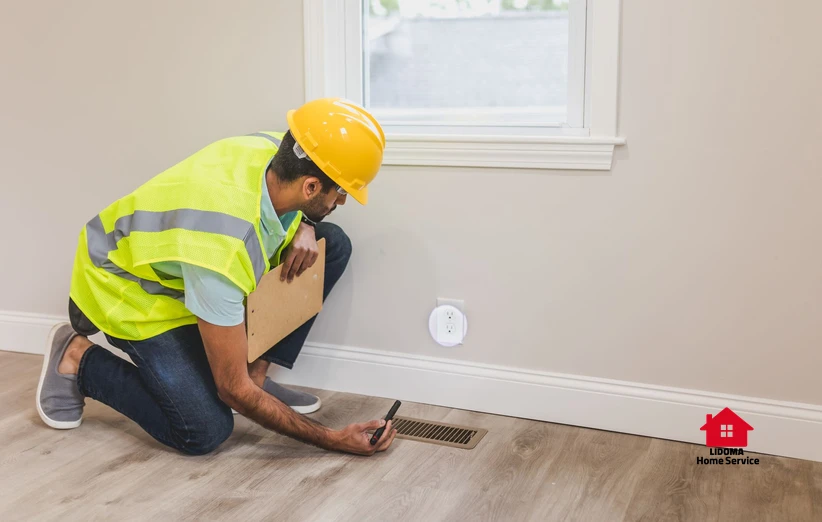
A well-run appointment starts before the equipment is brought inside. Homeowners should expect basic questions about the home, including approximate size, number of supply and return openings, basement access, pets, recent renovations, and any rooms with persistent dust or airflow complaints. These questions are not meant to complicate the booking. They help identify the likely cleaning scope and any conditions that may affect time on site.
When Lidoma Home Services arrives, the technician typically begins with a walkthrough of the accessible HVAC system. The walkthrough may include locating supply registers, return grilles, the furnace or air handler, main trunk lines, filter location, and areas where access is restricted. The technician may ask when the filter was last changed, whether the furnace has been serviced recently, and whether any unusual odours occur when heating or cooling starts.
During the cleaning process, the technician’s goal is controlled debris removal. That means using vacuum collection and agitation methods in a way that draws loosened material toward the collection point. Registers may be removed as needed, branch runs may be agitated, and return areas may receive extra attention because they often contain heavier debris. The exact method depends on duct material, access, and system configuration.
Homeowners should understand what the appointment does not automatically include. Duct cleaning is not the same as repairing disconnected ducts, correcting duct sizing, replacing damaged insulation, cleaning a blocked evaporator coil, or fixing a furnace fault. If the technician sees a condition that appears outside the cleaning scope, it should be explained as a separate issue. For example, a noisy inducer, ignition problem, or overheating furnace concern belongs under Furnace Tune-Up and Repair, not inside a duct cleaning quote.
A practical appointment should end with basic observations. The technician may discuss debris level, filter condition, access limitations, unusual duct conditions, and whether airflow complaints appear related to cleaning or to another HVAC issue. Lidoma Home Services emphasizes these homeowner conversations because they help people understand what was found rather than simply seeing equipment leave the driveway.
Before booking, ask these questions:
- How do you determine the scope before giving an estimate?
- Are return ducts included in the conversation, not just supply vents?
- What should I move before the appointment?
- What happens if you find damaged ductwork or restricted access?
- Will you explain whether dust is from normal use, renovation debris, pets, or a system issue?
- If airflow is still weak after cleaning, what diagnostic step comes next?
These questions protect homeowners from unclear offers and make Affordable Professional Duct Cleaning easier to compare on real value rather than advertised wording.
Common Mistakes That Make Duct Cleaning Quotes Hard to Compare
The first mistake is comparing quotes without comparing scope. One company may count only supply vents, while another includes returns in the discussion. One may assume easy basement access, while another accounts for finished ceilings, tight mechanical rooms, or multiple return drops. If the scope is unclear, the lowest sounding quote can become the most frustrating appointment.
The second mistake is treating duct cleaning as a cure for every air-quality complaint. Dust inside ducts can contribute to household dust circulation, but it is not the only source. Poor filtration, leaky return paths, dirty blower components, open basement storage, excessive indoor humidity, and renovation residue can all create recurring dust. Lidoma Home Services looks for these clues so homeowners understand whether cleaning alone is likely to meet their expectations.
The third mistake is ignoring the furnace filter and filter rack. A clean duct system can still pull dust around a poorly fitting filter. If the filter is installed backward, crushed, too restrictive, or undersized for the airflow requirement, it can contribute to comfort issues and debris movement. Homeowners should ask the technician to comment on filter condition and fit as part of the overall observation.
The fourth mistake is scheduling immediately after messy renovation work without controlling ongoing dust. If drywall sanding, flooring cutting, or basement finishing is still underway, cleaning too early may mean the system becomes contaminated again. In many cases, it is better to clean after major dust-producing work is complete and after filters have been changed. Lidoma Home Services can help homeowners time the appointment so cleaning is not wasted while construction dust is still being produced.
The fifth mistake is assuming all odours are duct problems. Musty smells may come from moisture, floor drains, basements, humidifier pads, dirty filters, or microbial growth in areas outside accessible ducts. Burning-dust smells at first furnace startup can be different from persistent combustion odours or electrical smells. If odours are sharp, smoky, fuel-like, or connected to equipment malfunction, call for HVAC diagnosis rather than waiting for routine cleaning.
The sixth mistake is forgetting the rest of the home comfort system. If a homeowner is also experiencing uneven heat, repeated furnace faults, poor cooling, or weak airflow at several registers, the duct cleaning visit may reveal that another service is more relevant. Lidoma Home Services separates cleaning observations from repair recommendations so homeowners are not pressured into unrelated work, but they still know when a symptom points beyond dust.
A final mistake is not asking how the home should be prepared. Blocked registers, crowded mechanical rooms, and unsecured pets can slow the appointment. A little preparation helps the technician work efficiently and reduces the chance of missed access points.
When Cleaning Is Enough and When Repair or Replacement Should Be Discussed
Duct cleaning is appropriate when the main issue is loose debris, visible dust buildup, pet hair accumulation, post-renovation dust, or stale air movement through otherwise functional ductwork. If the ducts are intact, accessible, and connected properly, cleaning can be a practical maintenance step. It can also be useful before or after broader HVAC work, provided the timing makes sense and the dust source has been controlled.
Repair becomes relevant when the technician finds crushed flexible duct, disconnected branch lines, missing end caps, loose boots, poor sealing at registers, or return paths that pull dust from wall cavities or basements. These problems can cause dust patterns, poor airflow, noise, and uneven temperatures. Cleaning may remove debris, but it cannot restore airflow through a crushed duct or stop dust from entering through a gap.
Replacement may be discussed when duct sections are badly damaged, inaccessible in a way that prevents useful cleaning, heavily corroded, poorly modified, or no longer suitable for the equipment and airflow needs of the home. In older Winnipeg houses, some duct systems have been patched repeatedly through renovations. At a certain point, replacing a damaged run or reworking a return path may be more useful than repeatedly cleaning a duct that keeps collecting debris from the same defect.
This repair-versus-replace conversation also applies to equipment around the ducts. A blower wheel packed with dust may need furnace-specific service. A failing furnace that overheats, short cycles, or cannot move enough air may need diagnosis through Furnace Tune-Up and Repair. If the equipment is near the end of practical service life and the home has broader performance problems, Expert Furnace Installation may eventually be part of the planning conversation, but that should be based on actual condition and homeowner goals, not a duct cleaning scare tactic.
Lidoma Home Services helps homeowners separate these categories during inspection. The technician can explain whether the visible problem is contamination, access limitation, physical damage, airflow restriction, filtration weakness, or equipment performance. That distinction matters because each issue has a different cost driver and a different long-term result.
Call a professional promptly if you notice weak airflow in multiple rooms, a furnace that shuts down unexpectedly, burning or electrical odours, water around HVAC equipment, repeated filter collapse, visible disconnected ductwork, or dust blowing out immediately after a filter change. These symptoms may still involve duct contamination, but they can also point to system conditions that need diagnosis before cleaning is treated as the solution.
Homeowner FAQ: Cost Factors, Timing, and Realistic Results
Why do duct cleaning prices vary so much between Winnipeg homes?
Prices vary because homes do not have identical duct systems. Vent count, return design, access, debris level, renovations, pets, and mechanical room conditions all affect time and method. A quote should explain what is included and what conditions could change the scope.
Should I book duct cleaning before or after a renovation?
If the renovation is still producing dust, wait until cutting, sanding, and drywall work are complete whenever possible. Change filters during the project to protect the furnace, then consider cleaning after the dust source is gone. Lidoma Home Services can help you decide whether the system needs immediate attention or whether timing the cleaning later makes more sense.
Will duct cleaning fix weak airflow?
Sometimes cleaning helps if debris is restricting accessible ducts or returns, but weak airflow can also be caused by closed dampers, undersized ducts, dirty filters, blower issues, coil restriction, or equipment faults. If airflow remains weak, the next step may be HVAC diagnosis rather than another cleaning.
How often should Winnipeg homeowners clean ducts?
There is no single interval that fits every home. Pets, renovations, filter habits, humidity, occupancy, and dust sensitivity all matter. A home after basement finishing may need cleaning sooner than a stable home with good filtration and no visible buildup. A technician should base recommendations on conditions, not a fixed calendar alone.
Can duct cleaning reduce household dust completely?
No service can remove every source of household dust. Duct cleaning addresses debris inside accessible ductwork, but dust also comes from fabrics, outdoor particles, pets, basements, leaky returns, and normal activity. Lidoma Home Services focuses on practical source clues so expectations stay realistic.
Is the lowest quote usually the best choice?
Not necessarily. The lowest quote may be fine if the scope is clear and the home is simple, but it can be risky if returns, access, debris level, and furnace-area observations are not discussed. Compare what is included, how the technician handles access, and what happens if damage or unusual debris is found.
How do I book with Lidoma Home Services?
For clear cost-factor guidance and scheduling for Professional Duct Cleaning, call Lidoma Home Services at +1 204 297 4420 or +1 431 374 3360. Ask about your vent count, return layout, recent renovations, pets, and any airflow or odour symptoms so the estimate starts with the right information.